Sunday, 11 May 2014

Making a Drama out of Grammar (3)

Personal Pronouns’ Photo Shoot


In KS2,the new DfE POS expects young learners to..... 

 "understand basic grammar appropriate to the language being studied, including(where relevant): feminine, masculine and neuter forms and the conjugation of high-frequency verbs; key features and patterns of the language; how to apply these, for instance, to build sentences; and how these differ from or are similar to English."

Here we are considering physiical and expressive ways to explore and internalise the meanings and use of the personal pronouns we require when working with verbs.

Personal pronouns refer to the person or other people and things doing the action/ controlling the choice of verb ending.
Young learners need to play with these personal pronouns to understand their role in sentences and how they are the “trigger” that generally changes the ending (spelling) of the verb stem.
This is an activity for learners who have reached the stage in their use of present tense verbs in simple communication (such as questions and answers about themselves), when you think it is time to focus on the personal pronouns and how these alter the meaning of a question or answer.  


Participating in physical activities and performance has always helped my learners to internalise the key personal pronouns and to want to learn the meanings of the new words in the target language.
Below is a sequence of activities that lead to a “Photo Shoot” as if the children are models posing for the camera in a real photo shoot .There is some groundwork that has to be done first …in any good photo shoot, preparation is key!

A note for the language teacher!
Personal pronoun word choices are different depending on the target language.In French the word for "they" depends on whether it’s a masculine, mixed or feminine plural personal pronoun (ils/ils/ells) and in German there are three different meanings of the same sounding personal pronoun -sie(she),sie (they) and Sie (you when you are being polite).In Spanish we do not always use specific words for the personal pronouns when we form the verb.The meaning of the verb in Spanish is contained in the ending change on the verb stem.
However all the language learners need to know that the sound of the spoken verb and spelling of the written  verb in the target language is dependent on the personal pronoun used when creating the  message in our heads.
It's good therefore to start the physical activities below in English with our own target language pronouns first.You can discuss with the children the meaning of the pronouns in English. 
Once the children are comfortable with personal pronouns in English then we develop the “Personal Pronoun Photo Shoot” in the target language.

Steps to a successful photo shoot


Revisit and recall the personal pronouns in English.

Create symbols using stick men to simply represent the personal pronouns (I,you,he,she,it, we, you plural, they).Share your flip chart stick man pose sketches with the children. 
Here are mine. I have divided them into singular personal pronouns stick men symbols :


plural personal pronouns stick men symbols:


Ask the children with a talking partner to discuss which personal pronoun each stick man pose represents?
Now reveal your personal pronoun labelling. Where they correct?


A photographic record
Ask children to come to the front and strike a pose of a target language personal pronoun . Ask the class to take imaginary photos on their heads of these poses- just like they were real photographers keeping a record.


Strike the pose
Divide your class on to groups of four – two boys and two girls. They are now a team. In a large space, in the play ground or if it’s possible in your classroom play a game of “Stop! Go! Strike the pose!”.Ask the children to walk around the classroom when they hear  “Go!” and to find their team members and stand still when they hear “Stop”” and then as a team to strike the pose of the personal pronoun they hear!Pause and hold and then start the game again.
Now add an element of competition.Last time to take the pose is out!Who will be the last team standing and the best team to strike the poses? 


Photo shoot producers
Now two groups of four children must work together. Working with the second group, can the first group become the producers of a photo shoot? Make sure the stick men symbols and labels are clearly visible at the front of the classroom for reference). Each child takes it in turns to call a pronoun and the other group must strike the pose .Swap roles so that the second group are now the producers.Share the photo shoot performances with the class-ask each group of producers to select what they think are their best two shots.


Frame the photo shoot!
Finally back in their original groups ask each group to create a sequence of “photo shoots” to depict the personal pronouns they have been practising.
Why not create a photo shoot gallery?Take real photos – one from each group of children (their best shot perhaps?) that can then be labelled with the correct personal pronoun and be in the classroom on display as part of their photo shoot for future reference!


Saturday, 10 May 2014

Making a Drama out of Grammar (2)

Word sculptors

Take a single word and sculpt a range of meaningful messages!


This simple drama and creativity idea is targeted at UKS2 learners to encourage them to manipulate simple present tense sentence structure.(You could use this in KS3 as a transferable learning tool to engage pupils in work with different tenses , more complex sentences and unfamiliar language that they have to put into a new context).

In KS2 the new DfE POS expects young learners to..... 

 "understand basic grammar appropriate to the language being studied, including(where relevant): feminine, masculine and neuter forms and the conjugation of high-frequency verbs; key features and patterns of the language; how to apply these, for instance, to build sentences; and how these differ from or are similar to English."

These ideas below are all part of the same lesson and children working in groups of four will explore how a single word can be used in a variety of contexts and using different sentence structure to convey different meanings. The children need to create interesting structures and performances so just like sculptors they create meaningful and creative spoken sculptures.Below is a chart I have created to explain the four elements of each group's language and drama activities. Each group should be given the same noun on which to base their language work. At the end of the group work , when groups share their work,part of the discovery will be to see how the different groups have used the same noun with different language and in different contexts and performances.  


 How do you achieve this?

  1. Each group should be given the same familiar or unfamiliar noun.Allow the groups access to a bilingual dictionary if necessary.       
  2. Ask each group to discuss and write the following:
  • A sentence using the noun
  • A question and answer using the noun
  • A simple description with adjectives in a full sentence or sentences using the noun.
  • Three  command statements using the noun
  1.  They must then become the "creative sculptors". Each group must divide themselves in to two pairs and each pair is responsible for two parts of the sculpture
  • A spoken sentence portrayed by different emotions several times , so the meaning changes slightly
  • A question and answer that is animated and delivered by two children in character
  • A simple spoken description that has added colour using actions,movements and percussion backing music.
  • A three line command rap   
  1. Allow the groups  time to refine their performances and to memorise their spoken language. Ask the groups to create a visual display of the language contained in their four performances. They must all freeze frame (in character) whilst one pair performs part of their word sculpture… each group must be in a freeze frame related to their performances.
  2. Now they must perform  for the class. How many different performances using the same noun have the class created?


Celebrating languages with the Commonwealth Games 2014

Celebrating languages with the Commonwealth Games


What a wonderful opportunity to allow young language learners the opportunity to listen and practise languages that are less known and spoken by some people within the Commonwealth.It's marvellous opportunity to share the diversity of languages!


Here in Warrington we are 20 miles from Wales and just across the Irish Sea from the Isle of Man.The Commonwealth Games take place in 2014 in Glasgow so let’s firstly share languages close to home!


Why not start with Peter Rabbit told in Scottish?

Listen to the story and see how much the children can understand?

Share with children the comparison of words in Scottish and English , taking examples from this chart. Can the children guess what the words might mean before you share with them the English meaning?

Teach the children some simple Gaelic using language and support from the website Gaelic4parents.
Can your children identify athletes at the Commonwealth Games that will be representing Scotland?


Let's learn  our numbers our colours and our simple greetings and questions in welsh . Certainly for the children in our network that we work with this makes sense.They have teachers who speak Welsh and most probably takes out at the seaside on the North Wales Coast. Indeed we take our children to the North Wales coast for school trips and holidays.
Take a look at this learn-welsh website for all sorts of sound files and activities!
Can your children identify athletes at the Commonwealth games that will be representing Wales?


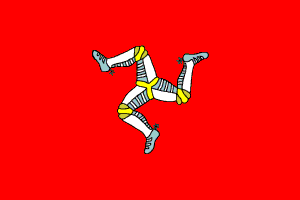
It's just a short (well truthfully four hour) ferry sail from Liverpool to the Isle of Man , but we can fly there in 30 minutes too! 


Do your class realise that the island has its own language of Manx?Why not watch the You tube clip above and practise some simple Manx with the class?
Can you children identify athletes from the Isle of Man that will be representing the island at the Commonwealth Games.

Let's go further afield! 


It's definitely a chance to go further afield and to explore the sounds and script of languages that our children may never have heard of or be aware of.Let's take them to Tonga and listen to the sounds of Tongan and look at the script of the language. Here is the Tongan Omniglot website link you will need for the sound files and script.

You could explore the language of Brunei on the same website: Malay or learn more about a language nearer to home Maltese.

Finally there is never a bad time to practise with your classes the New Zealand Hakka which the children will no doubt see at the start of the Rugby Sevens matches in which New Zealand participate.Use the BBC Sports Academy website page to access both the words and the actions to the Hakka.


Thursday, 8 May 2014

Making a drama out of grammar (1)


I am passionate about the use of drama to explore and consolidate language learning.Over the course of this academic year I have been considering ways to use drama to practise and consolidate young learners knowledge of grammar in a target language.This is my first bulletin on simple drama activities linked to grammar in the target language.

I think that drama can help the primary child to meet the demand below of the new POS for languages at KS2......

"understand basic grammar appropriate to the language being studied, including(where relevant): feminine, masculine and neuter forms and the conjugation of high-frequency verbs; key features and patterns of the language; how to apply these, for instance, to build sentences; and how these differ from or are similar to English."


On 17 June we will be holding our annual network conference.I will be encouraging teachers to consider simple ways to engage children in the physical  learning, practising and reinforcement of simple grammatical structures through drama and performance.


Here are a few simple ideas for you may like to try to out with your young learners and encourage them to use their bodies and imaginations to bring grammar to life!

They are simple performance activities that can be attempted either in the classroom or in a hall space or in the playground.


Nouns 


Noun Collectors

In the early stages of learning a language we introduce children to collections of nouns. 

Can we engage the children with the collections of nouns and understand the ways we can use these?


Noun collector nets (learning and recalling nouns)

1 .Practise the key nouns related to the content and context focus with your class


2. Encourage the children to hold an imaginary net (like a butterfly net). Can they either stand up away from their chairs or move   freely around the room or the hall and catch the nouns you have practised one by one. 

  • What do the nouns sound like as they are caught- are they long words, soft words, large words, squeaky words etc? 
  • What do the nouns look like? Are they nouns high up in the air they are hard to catch as they float by or are they nouns to be found sliding along the floor or hiding around a corner or under a chair ? 
The children’s voices and actions and ways they catch the nouns in their imaginary nets should reflect how they hear and perceive/ see the nouns in their minds.

3. Can the children share their nouns  that they have caught in their nets with a partner?Each noun should be released from the net as an action and a sound and should disappear back into space as they were found e.g.floating away, under a chair , hiding , sliding quickly away.


Noun collector’s treasure (masculine , feminine , neuter)

  1. Practise the key nouns related to the content and context focus with your class.

  1. The children work in pairs with the written nouns on cards and they must fill their own treasure boxes with these precious nouns
  2. The children could pretend to be pirates or Kings or millionaires. What they must demonstrate is how much they "treasure" their items and want to put them away carefully - just like we need to store the nouns carefully in our memories and remember the genders of the nouns correctly.They have two imaginary treasure boxes in French and Spanish and three imaginary treasure boxes in German( masculine, feminine and neuter singular). One child mimes the noun on the card and the second child must remember if it is masculine, feminine or neuter and place the treasure (as if it was the object) itself into the correct treasure box. Children might need to wrestle with jungle animals, or carry food items carefully … without eating them   or fold up clothes items appropriately etc .The children should swap roles every third noun.
  3. You can use this activity with singular and plural or with indefinite articles too.

Adjectives


Adjective actors


As the children develop in their language learning from stage one into stage two of language learners they l begin to create simple sentences describing objects. 
Can we encourage the children to internalise and recall key adjectives through physical performance? 
Can we allow the children to physically explore and demonstrate how adjectives change depending on what type of noun they are describing?


A fisherman’s trawl of adjectives 

1.     Working in a large space,paste six to eight adjective word cards on a wall opposite to where the children are standing in pairs.The children should work on this activity with their partner. Each partner takes it in turn to pull in their "imaginary" fisherman’s net and share with their partner the adjective they have caught. This child reads silently all the adjective cards and selects the adjective that he/ she wants to catch and pull toward their partner in the imaginary net.To do this he/she will need to pull the net at least four times towards themselves and after each pull must portray by actions and sounds a meaning of the adjective e.g. cold ( shivering then saying “brrr” then putting on a piece of warm clothing then rubbing and blowing on their hands) . 


    Can the other partner guess, identify on the cards and say the key adjective as the imaginary net is pulled right up next to them? 
    The children then swap roles and pull in another net with an adjective they have “caught”

2.Make this a more challenging activity by mixing up noun and  adjective cards on the wall opposite the children . Can the child who has to perform the mime , select an adjective from the nouns and adjectives they can see?Can s/he mime this for the partner and can the partner go to the wall and select/point at / write down or collect the correct word card for their fisherman's net.

3. Make this two team race- who can collect all their adjectives first? 

If you enjoy these activities with your beginner learners then maybe you can revisit the activity with more challenge later in their language learning development . Take a look here at Advanced adjective fisherman's trawl


Different sides of an adjective.

  1. Once you have practised with the children the agreement of adjectives with masculine , feminine , singular , plural nouns ( and in German neuter nouns) the children will be able to take part in this four sided activity.

  1. Divide your children into groups of four. Ask them to stand in a square facing outwards. Each group of four is working in the first instance with one noun e.g. if you have been looking at clothes then each group has a clothes item. They must create a moving 4D image of the noun and four adjectives that can be used with then noun. Each child in the square is responsible for the performance and the utterance of the noun with their adjective. Remind children to think carefully whether the noun is masculine, feminine, neuter, singular or plural. Remind them that you will need to hear the correct agreements on the adjectives.
  2. Now swap the activity over. Give the groups one adjective and four pictures of items (e.g. animals/furniture/foods)   – each one is a different gender or singular/ plural. Can they create a speaking sculpture of their adjective used with different nouns? Each member of the sculpture is responsible for the spoken utterance of one of the nouns and the adjective with correct agreement and the performance and depiction of the noun and the adjective.
  3. There is an opportunity here to film the performances and fade one performance into another so we see and hear four “different” sides of an adjective!


Verbs


Across the four years of KS2 children will come in to contact with verbs.There are  many ways that we can explore verbs through drama. Here are two simple examples to use verbs physically in drama and language activities.


Powerhouse Machine Imperatives!

1.Practise verbs of action – run, jump, hop, skip, dance, walk with the  children
2. In groups of six ask them to create a “powerhouse machine “. The machine must move around and must be made up of the imperatives and the actions and the sound of the actions. The children can use one action as many times as they want but all actions must be included.How high ,low, far, fast and slowly can their powerhouse machines move? All six children must be included in the performance.
3. Share this with the class
4. Join the machines together and create a class powerhouse machine!


Robot routines


  1. Practise with the children the phrases they would need to use to describe a sequence of activities they may participate in e.g.own daily routine in the morning or activities on a day trip to the beach.
  2. Sit two children opposite each other and ask one child to be in control of the daily routine phrases they want to say.This child needs to say a sequence of sentences describing specific activities.
  3. Can the partner respond with the correct actions? 
  4. Can the partner then remember and repeat the sequence of phrases with the correct actions. This child is now "the robot"-programmed by the first child.
  5. Can the robot adapt the actions and the phrases to generate a robotic type speech and actions?
  6. Can the robot move to another partner and share the sequence with the new partner who then adapts the sequence back to a human voice and human actions?

Wednesday, 7 May 2014

Year 6 on their way to meet friends in Spain!

This afternoon I have received the wonderful report below from the Languages Coordinator, Tina Charnley at Latchford St James CE  Primary School, Warrington. Supported by our very own JLN Spanish language teacher Jose Maria Jimenez Year 6 are preparing for the annual week in Spain with their partner primary school in Rincon ,Malaga!


Take a look at the school website which is beginning to fill up with exciting news for the children, teachers and wider community to read about the visit and the preparations that have been taking place! 

Just before Year 6 broke up for Easter they were reminded on the website that it is ......................................

Nearly time for Spain

We will soon be going to Spain, so all year six should be practising their Spanish phrases over the Easter holidays. Buena suerte!

First a little context! 


Learning a foreign language is a liberation from insularity and provides an opening to   other cultures..................... It should also provide opportunities for them to communicate for practical purposes
(new KS2 POS for languages)

Who would have thought that such an amazing opportunity for the children from this town centre school could have developed into something so magnificent! The school has developed a whole school Spanish language learning programme from Nursery to Year 6 and have established productive and purposeful language and cultural links with a primary school in the Rincon de Victoria, Andalucia.Who would have thought back in 2006 that a headteacher initial link visit funded by the the TDA would lead to such a dynamic link!

Latchford St James CE link school project is about two dynamic head teachers, one from Rincon in Malaga and  one from Warrington,deciding that there was no reason why their  10 and 11 year old children couldn’t meet each other and spend time together! There is a lot that goes in to making this link so successful and all the members of staff and business administration teams in both schools work hard to make the visits so successful every year. All year round the children in the whole school contribute to keeping alive and real the letter, project based and virtual contact .It's most definitely a whole school focus.

The project started about 8 years ago and has grown from a small group of year 6 parents agreeing for their children to go to Malaga for a week to now the whole class expecting at the end of their six or seven years of learning Spanish in primary school to go to Malaga and spend time with the friends they have been skyping! The system works well . One week is spent in Malaga and several weeks later their Spanish friends come to Warrington and stay at the Peace Centre and spend a week at Latchford St James.The children go to school together,take part in traditional cultural activities together,visit castles and beaches here and in Spain and speak with each other in Spanish and English.By the end of the first week they are all best of friends!
The school has invested in Spanish language assistants trained and supported by JLN and currently Jose  works in the school every Wednesday. The programme runs the  whole year round and he delivers lessons from Nursery to Year 6 in line with the JLN SOW.All the children make tremendous and noticeable progression in learning a foreign language …. and what a reason to learn to they have! 

So now over to the school and their report about how Year 6 are preparing to fly over to Malaga and visit their Spanish school friends !

This term we have been working really hard to prepare for our visit to Malaga and since the whole class are coming we have spent some of our Spanish time working on basic conversation to help us whilst we are there. Our Spanish lessons have become something the children really look forward to, especially during the SATs preparation time.


We have been skyping our Spanish school frequently and now the children feel that they know the children that they will be meeting and spending their days with. 


We organised ourselves into three groups- to break the ice- and we chatted about Computer games, music or sport. As the children became more confident they also chatted about families and favourite TV shows. We all enjoyed learning a Spanish song and dance which we performed alongside the Spanish children and staff!


We will be visiting a market whilst we are with our Spanish friends and so we spent some time learning about the phrases we might hear and need when we are there. We had a great day when we set up a marketplace in the Year Six classroom, with various stalls all containing items which we would find in a typical market. Jose made sure that the room became a noisy one to reflect a real market place and the children all thoroughly enjoyed it.  Year Six then invited all of the other classes to visit the marketplace where all the children used their Spanish to ask for items, how much they would cost and then describing what they had bought.


As we are lucky enough to spend time on the beach we feel it is important that the children can all  buy their own ice-creams etc from the Kiosko and so we also spent time role-playing this whilst also getting used to using Centimes.


Some of our year six children are very competent now in everyday Spanish and have enjoyed assisting Jose with the younger children. We have put some of their work and photos on our website and hope to upload photographs daily whilst we are in Rincon de la Victoria(Spain)


This is primary language learning with a clear purpose and I look forward to following Year Six and their week in Spain on their website! 


Thursday, 1 May 2014

Tour de France Sequence of Lessons


Follow and celebrate the Tour de France 2014 as it travels from Yorkshire through England and across to France 
and around ,up and down and through the country! 


This afternoon we having been discussing the tour de France! Here are a sequence of lessons that I have helped to create based on the resources you can find here tour de France links and resources

Below are some ideas for us firstly to use in all target languages: 

A virtual tour of the Tour de France !
A virtual tour from Yorkshire to the finishing line in Paris
Let’s create our own virtual 3D tour and add our own 2D and 3D famous buildings from cities on the way  to the finishing line . Create a 3D tour Eiffel for the finishing line!

Here's a video clip to help us achieve this 


And follow this link to find 
a 3D tour Eiffel   
to complete your 
own virtual 3D class tour 


Physical Grammar Game !

The class need to decide on three symbols to represent nouns, adjectives and verbs. Stand up right for a noun, wiggle your body for an adjective and pump your arms for a verb ( just like you would have symbols in Charades for book, film, musical etc.

Divide your class into “Tour de France t-shirt teams- different coloured t-shirts . No team should be le maillot jaune/la camiseta amarilla or das gelbe Tshirt. This one is for the winners!

Let’s brainstorm nouns, adjectives and verbs that we associate with the tour de France. Can access these in the target language in bilingual dictionaries .
Here are some to start us off  ……….


Nouns

Cyclist , bike , wheel, tyre, puncture , race ,helmet , t-shirt , shorts ,road ,city ,start, finish ,speed, power….

Adjectives

,fast , fit ,tired, thirsty, determined , exciting, powerful , competitive ,breathless


Verbs

To push , to pedal ,to race ,to compete, to challenge , to cheer, to watch , to participate, to win , to lose , to pass , to crash, to celebrate


 A volunteer  from a team selects a word from a cycle bag and decides if it’s a noun, an adjective or a verb. They must mime this – one point for getting this correct and then they must mime the meaning of the word- one more point for the team if they can guess and say it in the target language. If you play this UKS2 Year 6 or with KS3 with there are two bonus points with UKS2 if they can put the noun or the adjective in to a simple sentence and can any of them create a first person singular present tense statement with a verb (e.g. I push , I pedal, I race etc )? Verbs would b e at the teacher’s discretion – depending on whether they are regular verbs or not in the first instance.


 Cyclists on tour- a language recall game!


You will need  dice ,different coloured  counters for the players and the board,which you can download here Simple tour de France and sports vocabulary game

It doesn't just need to be abut sports though ....read on!


Divide your class in to teams of four .How many times around the board can the children race before the end of a designated amount of time – on a countdown timer ? If they land on an odd number they have to pick up a picture card and say the word they see in the target language. If they land on an even number they have to ask a question of another person in the game. They cannot repeat the question that was said by the last player to land on an even number. The winner of the race will own the yellow jersey and will have been around the board the most times or got the farthest around the board before the end of the timed race!


Our own class jerseys!

Take a look here at the jerseys that are rewarded during the whole race  

Can the class design their own Tour de France jerseys – either on real plain white t-shirts or as card cut outs for a class mobile or display? Each of these t-shirts should have written on them the characteristics of a true sportsman in the target language – either as single words or as simple present tense sentences using the verb “to be”  

Superlative t-shirts

Take a look at how to form the superlative in the target language . a good activity again for Year 6 or KS3 .In your class which characteristics make the best members of the class …. The most organised, the most creative, the tidiest , the most helpful, the kindest. Now can your class help you to design reward t-shirts for the duration of the Tour de France?these can be awarded for the “superlative” people in your class during the Tour de France! Display the t-shirts with their superlative labels for all to see and add the faces of the children who win these t-shirts one by one.


Poster Power Poem Performances! 

Why not create your own Power Poem Performances using posters as stimulus for draft writing of poems which can be short such as a haiku made up of adjectives or verse by verse present tense sentences using a noun verb and adjective to describe elements of the Tour de France. The children  perform the poems and bring the posters to life!
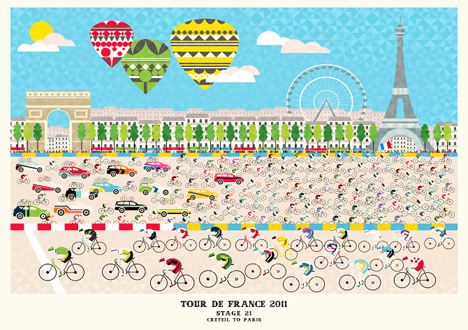
Here's the link to the blog post with the poster power poem lesson guide and below is a poster that inspired me!


And finally for French language learners ….


Food Fest

Let’s go on a Tour de France food fest and take in the regional foods. Let’s have a food-tasting journey and keep an E- journal of the foods we try – photos, sound file comments and short videos of foods we try or foods we find on line. Take a look at this article of 40 Tour de France  regional recipes 


Mon vélo est blanc

Let’s learn and perform this simple poem for a school assembly. Why not adapt the poem and change the colours.


Or take a break and watch with KS2 children le petit Nicolas le vélo