Monday, 21 April 2014

Poster Power Poems Tour de France


We can create a class performance poem that shares the flavour and the events of the Tour de France.(As my Spanish and German teaching  colleagues point out there is no reason why this should not be an international focus as some many cyclists  participate from across French , Spanish, German and English speaking countries).

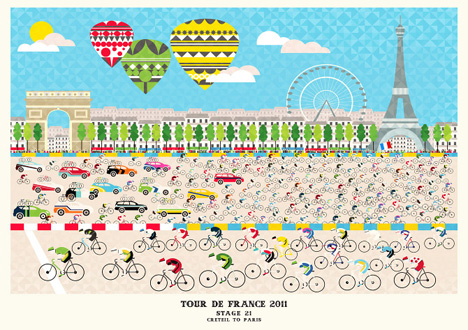
First select your poster . For the Tour de France I love the posters from the Crayonfire website of the Tour de France


I have selected this evocative poster of the Tour de France from this website capturing the moment when the tour passes through Paris 


You need to look carefully at the poster you select and decide which themes you can identify in the poster that you have already practised with your pupils. The children must be able to create full sentences - noun, verb, adjective or adverb -to describe what they see and feel in the poster.

In the poster above our Year 5 and Year 6 children will be able to create sentences about the city , the weather, the cyclists' personalities and characteristics , the parts of the body and the cyclists as they race through the city.

Divide the poster into focus areas . Below you can see that I have been able to divide this poster in to four focus areas : weather / city and the famous buildings / cyclists / cyclists,parts of the body and the race.


Gathering the language for our Poster Power Poems Performances 
  1. Look carefully at the complete poster with your class and brainstorm the key target language they can think of to describe what they can see.
  2. Record this for the class on a flip chart piece of paper which is laid out as four empty areas as in the poster above.Record the language the children think of in the correct area of the poster.
  3. Working as differentiated ability groups allocate one focus area to each  group  in  the class. 
  4. Ask each group to work as team to create a sequence of sentences - one per child in the group- to describe what they can see.Give the group a formula to work with:

NOUN/ VERB/ ADJECTIVE or ADVERB  


Creating our Poster Poem Performance Sentences
  1. Working in the groups, ask the children to check that they have used the three components in their sentences (noun, verb, adjective or adverb)
  2. Can they now order the sentences they have created so that they create a powerful description of their part of the picture.
  3. Each child should select a sentence to which they need to add actions and voice (e.g. calm, fast , powerful, cheering, loud, mechanical,tired). You may at this point want to bring the class back together to explore this idea with a sample sentence from each group or a sentence that you have created.
  4. Each group must now order their sentences in to a verse of the class  poem  

Poster Power Performances 

  1. Make sure all the children can see the original poster . Ask them in the syle of the poster to add rhythm and beat to their poem verses that they have created.Each child is responsible for adding this agreed rhythm and beat to his/her sentence.
  2. Now your class can perform their poem together as one whole poem about the Tour de France.  

Bring our "Poster Power Poem" to life for a grand finale! 


  1. Record each group's poem and performance.
  2. Play the performances to the class in a sequence agreed and organised by the class.


Thursday, 17 April 2014

A journey worth the taking: as a little girl I remember my Grandma sharing with me Miss Hilton's suitcase. This was no ordinary suitcase as this was the suitcase of a distant relative who had travelled and had been on "European Tours" at the start of the 20th Century.

I was fascinated by the labels on this suitcase which told me a story of places she had visited.

Yesterday on Twitter I received this tweet below.....  

gentlework pic.twitter.com/KdTBALZ9B6
Next half term with our Year 5 children we will take them as tourists on a journeys around target language (French , German , Spanish) cities and places. 
Using the picture above as a model and referring the children to globes,class atlases  and going on Google Map journeys we will be able to link geography, culture and language learning together to create our own artistic versions of the journeys and the cities and the experiences the class share on their learning journey.

Let's use country maps, zoom in with city maps , take print offs of google map,track where we can visit on Google Maps and add imaginary postcards . We can add items to touch and feel and smell associated with the city e.g.Sevilla - orange blossom.

4 KS2 lesson ideas inspired by Matisse at the Tate

Expressing art through the medium of language and performance. Matisse is a great opportunity to revisit and explore colours, emotions and movements in the target language and create our own spoken and written performance galleries in the style of the Matisse cut outs.

Friday, 11 April 2014

Reading in the target language is great


Target language books are great !

Reading story books with target language learners was a revelation to myself back in about 1997! At the time my children were young readers themselves and it seemed crazy that I hadn’t made the link myself between the types of colourful , engaging and repetitive stories that they enjoyed and re-read and the type of books that my young target language learners would enjoy and ask to read again and again.

The delight back then on  the Year 6 child’s face when we read la chenille qui fait des trous and the delight again  when the Year 8 child realised I was reading  Max et les maxi-monstres ! This was perhaps a mystery to me at first (although I have always loved children’s books and am also an avid reader of all literature )but then I realised it was because they felt they could understand and follow the whole story . They were revisiting books they had enjoyed in primary schools too! They even felt like competent translators of texts !

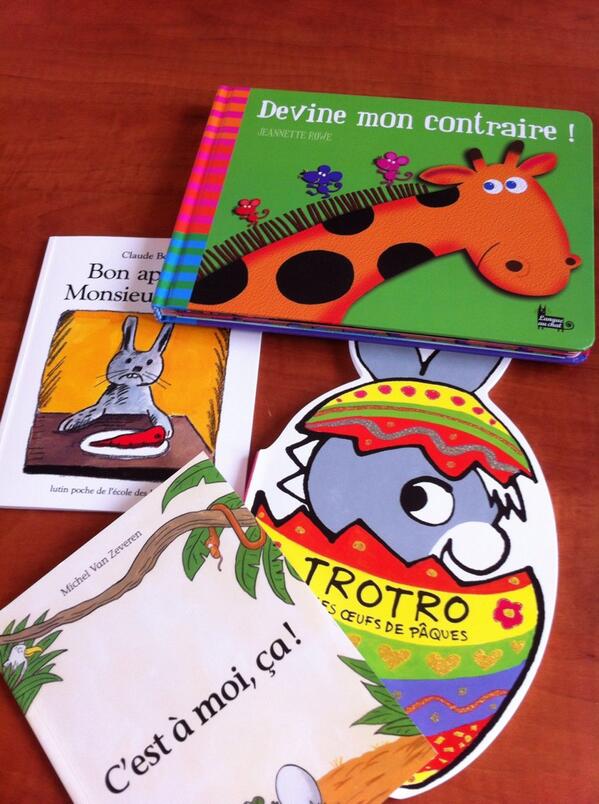
Now we work with a comprehensive SOW  from Year 3 to Year 6 and try to integrate target language story books as often as we can .  A tweet this morning from my colleague @EWoodruffe just made me smile. She’s been to  Cultura back home in France and bought some more books that we will be adding to our collection of stories next term. (Somewhat jealous really as love book hunting!)


The network news article from Sam the languages coordinator at St Philips in Warrington caused me to think about how reading crosses boundaries as an effective learning tool and how all children can appreciate books !  Sam  read and used my blog on Vive les livres for  Day World Book Day  and created activities where children looked at and appreciated English language books but the children                                                     categorised them with French language


Sometimes we use stories that we can sit, watch and  listen to  and appreciate with the children for example   die kleine Raupe Nimmersatt (die kleine Raupe Nimmersat on You tube )  by Eric Carle (actually read in German by the author

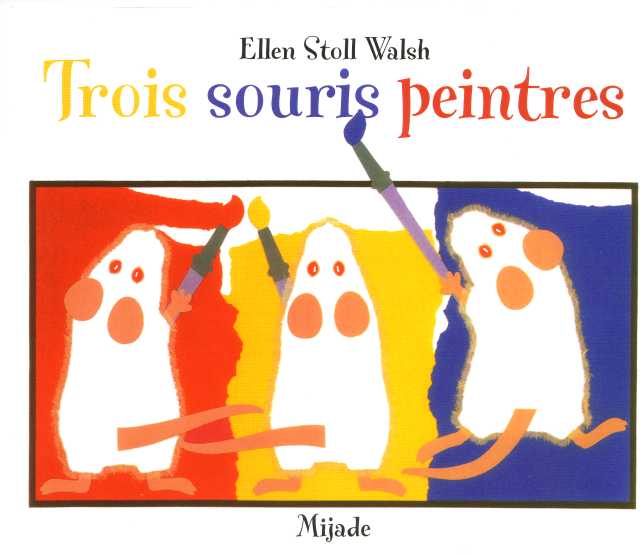
Les trois souris peintre s( les trois souris peintres on  You Tube )  : The story of three mice who want to be artists read in French

The German song retelling the story of Hansel and Gretel (Hansel und Gretel Lied on You Tube)

Behind each story is a learning purpose – so the hungry caterpillar is a great
way to revisit days of the week and reinforce foods before making your own diary of a week’s food or your own books of the simplified stories 

The story about the mice allows us to listen for pleasure to watch the moving pictures and to reinforce our practise of colours with the children


And the Hansel and Gretel clip is an excellent tool to look 
for nouns ,
identify verbs and develop the children’s ability to follow 
and comprehend a story . 
Plus there’s the added bonus that they can practise the song 
and join in and perform this at a later date !


Here’s a link to the story books we will select from each half term to support the children’s language learning in French. We have similar plans for Spanish and some German too .


And here are my   thoughts upon   why these books are appropriate   for the stage of the language learner and his/her development in the target language. These books are the gateway for the children in Year 3 ,4, 5 and 6 to familiar language in unfamiliar contexts , to creative opportunities to re-use language , to memorable stories with humorous twists , to familiar stories that the children haven’t before realised  exist in another languages as well as  English, to other cultures and to non-fiction with facts they really want to know or investigate!  Our learners reactions enable us to see what they find interesting and engaging and encourage us to use text in ever more 
                            creative ways .


We would certainly pinch the phrase from the DfE new POS and call them “great”. 
“great” to support learning , 
“great” to read with the children , 
“great” for independent reading 
“great “ as a platform to develop young language learners knowledge of a new language and its structure . 


The icing on the cake are the “great” traditional target language  stories such as roule galette when we celebrate epiphany in Year 4 les rats des villes et les rats des champs from Fontaine – a great favourite in “our town- your town” focus in year 5 or Astérix BDs we share with the children when we look at funfairs in Spring Year 6.


We start them early with target language books – we follow Uki from KS1 and puppets we make right through to a more grown up and argumentative Uki in Year 6  and we introduce the children to non-fiction too ……

With KS1 we enjoy traditional rhymes ,  tales and familiar stories . Here are my blogs on how we develop creative education of the ear learning opportunities in KS1 with shadow puppets and Goldilocks and We are going on a bear hunt in KS1 
                                    Spanish

We love "Mes p’tits docs " 
Our learners enjoy fiction and non- fiction and in the target language,using books created for the target language young audience we can read  and share facts about the target language countries .

From Year 4 onwards we will dip into and share mes p’tits docs – great non-fiction books to support our learning about the bakers and french bread, circus – what a French summer event , la station de ski ( a huge hit with our Y6 children!)


Books open our children’s minds to creativity . 
Take a look at my blog about one of my all time favourite books : Chapeau chapeau and carnival time 


Books allow us to  investigate core language through the engagement of the imagination – a choral performance of une histoire sombre


We can develop a class and group rewriting of key sentences in  il y a un alligator sous mon lit makes learning about rooms in the house so much more exciting! 


We make  creative DT displays based on Aaargh une araignée 


We can work with traditional tales combined with a  more mature investigation of fairy tale characters and fears through ” Même pas peur”  . 


Finally this year we have stepped out into trying to combine music and literature -indeed great music Au carnaval des animaux from Mozart with a great story about these animals going to a fancy dress party – funnily enough called au carnaval des animaux!


And guess what the target language results were great !
Please don’t read anything sarcastic into this above statement . 

We must select the books carefully  , encourage young learners to walk with us through stories , select books for their structure or their creative learning opportunities and then provide children with the supported learning environment to step away from us and explore simple target language audience stories on their own.  

As for me I will still be spending hours of pleasure in target language book shops finding the next great book to use in our language teaching and learning  . 
Must check my diary for when I am next abroad  !


Sunday, 6 April 2014

Progress and Creativity in Primary Language Learning and the Implications for KS3 


I am very excited about the opportunity to join language learning together between KS2 and KS3 . On Friday I spoke at ALL about the progress and creativity that  is happening in primary language learning and I suggested that in my opinion the implications for KS3 are positive.
Here is the link to my presentation progress and creativity in KS2 and KS3 implications


There will be a period of change and development in my opinion and Year 7 teachers will need to consider the use of AfL and revisiting and exploring prior learning and resources in the first term of Year 7.This will help not just to investigate and assess prior learning but also to celebrate and welcome new pupils into the World of secondary language learning .In my opinion just like children want to meet mathematicians, geographers , historians , artists , scientists , PE experts when they get to secondary schools so they want to meet linguists!


The new POS states that KS2 should “lay the foundations for further foreign language learning at Key Stage 3” and that in early KS3 language teachers  “should build on the foundations of language learning laid at Key Stage 2, whether pupils continue with the same language or take up a new one “.

What is the potential if we see the Summer break between Year 6 and Year 7 as a six week gap rather than a large obstacle? 

On either side of the gap language learning is taking place. Using AfL and  dialogue with other colleagues both in KS2 and KS3 we could explore where the Year 7 children are in their learning when they enter Year 7? Shouldn't it  be more about  about monitoring and observing for a period of time to gain a clear picture of the individual child's ability to operate with and manipulate language and structure than testing and setting?

In all my teaching roles, as a HOD, Key Stage 3, a Key Stage 5 Co-ordinator  and most recently a PL AST and consultant I know that I have always needed to mind the gap with all new classes at whichever stage they are in learning. At the start of a new year diagnostic informal formative assessment of where new learners are at in their learning is so important, isn't it?
By this I don't mean testing , but establishing routines and activities that allow the class teacher to listen , watch, explore and challenge the new language learners. Groupings within the class can be informed over time by this information. 

Dialogue with and between KS2 and KS3 colleagues
 will be key .
The gap is six weeks.
The fix is not necessarily quick but can be at every stage in
the process informative and effective for the specific Year 7 cohort of the academic year.
The picture (right) shows a recent meeting between primary and secondary language teachers.These teachers have been involved in dialogue via email  and indirect coordinator dialogue for three years. Now they are beginning to work together and meet together to  decide next steps forward.They are finding out about and trusting each others approaches and judgements. It takes time but each year the next new cohort of Year 7 have benefited from the transfer of knowledge between theses teachers and the slowly dripping tap implementation of shared approaches to learning and resources. It's definitely not a quick fix but there is now established trust and a developing dialogue between colleagues in both key stages.   .

What does dialogue , sharing and minding the gap mean in practise? 

In KS2 the new POS offers schools a series of aims to guide the curriculum.The following “Aims” help to drive progress in the skills of listening , speaking , reading and writing . 

In KS2 we stage the learning progress  over four years between Year 3 and Year 6 . 
There are opportunities in Year 7 to revisit the learning process in all these skill and language developmental stages and to share and use familiar tools and resources with KS2 to help all the pupils in Year 7 make the transition to young secondary linguists. 

Listening : Understand and respond to the spoken language (KS2)

Listening in KS2 that develops from  listening attentively , to listening for key words to listening for key information in more complex sentences and texts 

A example of a possible shared resource and activity! We are using Listening Sticks  as a tool to listen for single items  , a variety of items , more complex details , through to identifying core language in a more complex text .

Implications for KS3 Y7 Autumn term ?


Why not revisit the skills, staging activities from the simplest to more complex listening challenges using an agreed shared tool and type of activity (e.g .listening sticks game). Why? Well the children will know what is required of them , will listen attentively to new language and will be able to demonstrate through the more complex sentence activities what they can already understand .


Speaking : Speaking with increasing confidence (KS2)

In KS2 the children learn to say single words and phrases and they move on to simple questions and answers. They build personal information dialogues and then they are able to use these dialogues as a platform to develop conversations .

A example of a possible shared resource and activity!Take a look at the totem poles  blog post to see how one resource can  facilitate activities which allow for this development of speaking with increasing confidence not                                 only across KS2 but in to KS3  .


Implications for KS3 Y7 Autumn Term? 
Why not  revisit questions and answers the children know? Allow children to share their own knowledge of questions and answers and to teach each other key phrases.Pair children together who have had different learning experiences , maybe in different languages . Encourage them to apply the skills they have built at KS2 using a familiar prompt resource e.g. the totem pole prompts to set themselves their own learning goals to produce effective interesting conversations 


Reading  Understand and respond to written language from authentic sources (KS2)

In my opinion this is where it gets really interesting! KS2 children are already being taught to be able to apply their phonic knowledge to say ,read and write familiar and unfamiliar words . What a gift for KS3 ! Phoneme – grapheme transfer -what transferable skills across all target language learning .  

KS2 children are also being taught how to use bi-lingual dictionaries to access meaning and to find new words they hear or want to say, read and write .They appreciate the value of the bi-lingual dictionary just like they do the calculator in maths . Again what a gift at KS3 and what transferable skills across all target language learning.

Implications for KS3 Y7 Autumn Term: 

Why not build upon and strengthen  the skills described mentioned above . Make sure all children can access and use bi-lingual dictionaries . Allow them to see how the skills they used in one target language with the bi-lingual dictionary and their understanding and use of  phoneme grapheme transfer are transferable to their new language learning situation . 

Possible shared resources and activities ?Why not revisit familiar texts at appropriate times in Autumn term Y7 and introduce new texts that challenge and interest the young pupils e.g. non-fiction texts , newspaper and magazine articles , sub titles to geographical and historical clips etc? 


Writing .Can write at varying length for different purposes and audiences (KS2 ) .


Examples of  possible shared resources and activities!Take a look at the KS2 writing examples on the power point presentation . We use air writing , smoke signals , creative descriptions such as jungle animal sentences to create shape sentences , messages in a bottle (ppt picture) , draft tweets (ppt picture) to encourage all our young learners to progress confidently from single words and phrases to more complex texts often written from memory .


Implications for KS3 Y7 Autumn Term


Why not embrace the new year 7 pupils ability to use a bi-lingual dictionary as described above?  Pair up the more  experienced dictionary user with a less experienced user . Offer the learners new writing challenges using familiar approaches e.g. the shape sentences , the messages in bottles or the draft tweets and set them new challenges to try to write accurately from memory using familiar language from KS2 . 

Maybe something like the work we are developing based on Who are you? with KS2 Y6 children and the same children when they enter KS3 Y7 this Autumn 2014 could be useful for your own KS2 KS3 transition programme.


And last but definitely not least the challenge of grammar

Our young KS2 learners start asking about nouns and the different words we put before the actual noun from about Spring  Year 3 . We have tried to express the way the young learner sees grammar through our Grammar Stepping Stones on nouns, adjectives an verbs 

Yes this is a work in progress but we are progressing  . 
In the blog post "the verb "to have" and a wizard's potion you can hear and find out how a non-specialist Y6 teacher has been allowing the children to re-explore nouns and  develop their initial understanding of the conjugation of the verb to have in the present tense. We supported the teacher with materials so hat she could develop her own teaching and learning based upon a wizard's potion  


Implications for Y7 Autumn Term 1
Why not use working walls to allow the children to share their drafts and ideas as they  progress through their written activities?
Buddy up children with prior knowledge of verbs with children who need support to understand more about how to apply simple grammatical rules.

Maybe a good place to start in Y7 by setting a personal information writing task and revisiting and practising the verb to be , to have , to be called , to like and  then using working walls to allow all the children to access each other’s rough drafts so that everyone can attempt a piece of present tense writing

So I am excited by the challenges of the new POS.

I think that we can achieve a continuum of effective  language learning. The progress we are now making in KS2 means that there needs to be effective dialogue between Year 6 and Year 7 language teachers. A culture of sharing of types of learning and tools and resources and a two way conduit between language coordinators in KS2 and KS3 needs to be carefully established. The conversations between colleagues can help to  find ways forward to revisit prior learning , challenge and celebrate the new learners in Year 7. Remember these new learners will be very excited to be working with secondary “linguists” .


Tuesday, 1 April 2014

Totem Pole Prompt Sticks


Totem Pole Prompt Sticks

  • Why totem pole? The pictures carved into totem poles tell the reader information and I see the link between this and a "pow wow" - having a conversation.
  • To develop and promote conversation :  asking and answering questions leading to preparing and practising a simple conversation using familiar vocabulary and structures in new contexts
  • Each box on the totem pole prompt stick is a visual prompt for the children to develop their simple spoken conversation.
  • The totem pole prompts start off as horizontal strips - questions prompted by pictures to prompt responses . It reads from left to right just like following a story for young language learners 


These are  card strips made from one A4 template of seven or eight identical strips or they could be computer generated and drag and drop pictures that the children can reorder  and create their own "pow wow" totem poles for more advanced activities - see below. 

Set the scene with this simple You Tube clip , which practises colours and numbers but extend this by asking the children when you pause the clip to decide what incidental greetings or questions might these two characters the cow boy and the squaw ask each other. Brainstorm possible answers. The responses expected from the children will depend on the stage they are at in their target language learning.


Simple conversation asking and answering questions- Y4 LKS2  activity
  1. 1.       Revisit and practise with the children how people from different countries physically greet each other or say farewell   ?
  2. Introduce each prompt picture on the totem pole and discuss with the children possible greetings / farewells and questions that the very simple picture clues suggest ( in this order the prompts require a greeting / a name question and response /a where do you live question with a true or imaginary response / an open question –what do you like ? or a closed question – do you like + animals etc/ a farewell .
  3. Children should spend a few minutes practising with a partner how to ask the individual  questions – remind the children to listen out for good pronunciation and the use of intonation when asking a question.
  4.  Children should then spend a few minutes practising their true responses as themselves
  5. Children should then work with a partner to create  simple questions and responses using the pictures on their totem pole sticks as their prompts and the order they should work in.
  6. Can the children re-run their questions and answers and add physical responses etc
  7. Pairs to practise their dialogues – taking it in turns to be the questioner or the responder(themselves)
  8.  Invite pairs to perform their dialogues for the class .
Extend  this activity by revisiting and creating new characters with the questions and answers

Using APPS such as the String APP where children can generate a picture of a cartoon character sitting in their own classrooms  , you could ask the children to use the same totem pole prompt stick to create an imaginary conversation between themselves and the strange visitor from the “String APP” . Check out Mr Parkinson’s blog here  to find out more about the String APP. Here is an example used in Literacy with Mr Parkinson's class at Davyhulme CP School Augmented reality clip


Extending conversations and creating an interesting performance using familiar language in a new context- possibly an activity to develop as a revisit activity in Year 5 and Year 6 UKS2

Here we want to encourage the children to move from a simple question- answer dialogue to a more engaging conversation that flows .
Give out the vertical totem poles this time 


A.      Revisit the simple dialogues the children made using their prompt   sticks in Year 4
B    If the children created their own character videos etc then share     some of these with the class as a memory jogger 
C.      How much more can they say now? Explore this with the class.   Now ask the children to take the basic building block prompts from their totem pole prompts and cut these up and rearrange them as the scaffold upon which to develop a new dialogue 


D.     Can they add  new picture prompts or create a new totem pole       prompt stick of their own so that they can share the new        questions and answers they have practised ?
E.      Introduce  simple phrases  such as   “and you ?” or “pardon” or “can you repeat that? or “me too “ etc – see highlighted text below which gives you a simple example of this .Encourage the children to generate a conversation based upon a simple question and answer dialogue that will to flow  e.g.


Hello ! How are you ?
I am fine and you?
Me too! I am called ...... What are you called?
I am called ..............Where do you live ?
I live in ........ And you? Where do you live ?
I live in ..............I like ..........What do you like ?
I like ............. Do you like ..........?
No I prefer ............
Nice to meet you !
Bye for now 
 See you soon!

F.   Allow the children time now to create a conversation with the   new language with a partner .
G.    Challenge some of the children to participate in a three  or four way conversation once they have completed task E successfully .
H.  Either perform or film the conversations on IPads or Chrome Books  and share on class IWB as an “Our Class Conversations  “ film clips .


Monday, 31 March 2014

Writing for Purpose Smoke Signals


This is a simple activity that can be used on many different levels . You can work with the children with  key individual words,a series of nouns with adjectives, question , sentence , complex sentence or short text .


Seat the class on the carpet in front of you or with older children if they are sitting at their desks or tables  make sure that they can see clearly the children you select to participate in the physical activity who will be placed at either side of the room.

All the class are involved in this activity and it's based on the idea of sending messages by smoke signals.Select two pairs of children - one pair  to send the smoke signals and one pair to receive and interpret the smoke signals . 
It also means that you could organise the pairings so that a more able reader works with a less able target language reader and a more able target language writer works with a less able target language writer .
The children seated in the class are the observers, who working in pairs must whisper what they see and say it quietly to each other in the target language  and then  write on white boards what they think the target language message is that has been sent .


These two pairs should stand on either side of the classroom or carpet visible to all the children . Pair one has a smoke signal card with a message in the target language written clearly on it .They must not show it anyone else and they should be given 60 seconds thinking time to work out the meaning and to decide on a mime .Pair two have an empty smoke signal card and a pen. They will watch the mime , have 60 seconds thinking and discussing time and then working together write down in the target language what they think the message is . 

Meantime the children seated in  the class observe the mime, think of its meaning, discuss this with their partner and write down on their whiteboards the phrases they think were passed as smoke signals above their heads  from pair one to pair two .

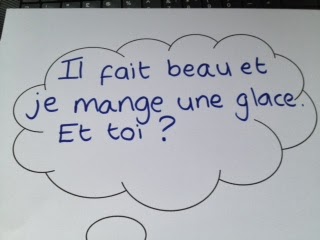
Here's an example of the Smoke Signals that we will be using during the Summer term with Year 5 . They will revisit the weather and ice cream flavours during their going to the beach language learning focus.We are working on writing longer sentences and asking questions . The children will be creating spoken presentations and dialogues about going to the beach and reasons to go to the beach in the target language.
Here's the written message :


We  can play the game with different messages and can encourage the children to create their own table or group  Smoke Signal games , where working with a table of six children - two children create the written message and mime it , two children observe and record what they see and two children feedback what they think was sent as a message and should have been written down .