Tuesday, 18 August 2015

Mirror mirror on the wall......


Start of the new school year and time to revisit the personal information questions and answers from previous years of language learning.
We have put in to place lots of games and activities over the last couple of years to make the revisiting of core language a challenge, a competition, a way to reflect on what we have learnt.

Here is another way that I think we can use at the start of the year to bring back in to focus the language we learnt last year etc to describe ourselves and ask questions of others.

The idea of the mirror on the wall allows us to practise first and second person singular questions and responses!
Each child needs an oval piece of paper:

Question and Answer Mirrors
On one side of the paper ask the children to write down the key information they think they can say about themselves in the target language.So for example a beginner learner from last year should be able to say  a name phrase/ a feeling/ where he/she lives/ his or her age and something he/ she likes (animal or colour or food).This is the "answer mirror"

On the other side of the paper (remember this is a mirror on the wall) ask the children to draw some symbol prompts for the questions: for example a beginner learner's symbols could be : a name tag / a house outline/ a birthday cake with candles/ a smiley face/ a heart shape.This is the "question mirror".

Play a game of spot the question and answer!
  • Ask the children to have their oval shapes infront of them on the desk with the answer mirror face up. 
  • Call out a question to elicit the information the children have put on their oval shapes.
  • Ask the children to listen to your question and to point to the response they would give.
  • Ask a child the specific question and ask them to read out their resonse.
  • Ask the children to turn over their ovals and this time to listen to the question, identify the symbol they have drawn as the question prompt and whisper to a partner the question that you as the teacher have just said.  

Mirror Mirror on the Wall!
Working with a partner, ask the children to take it in turns to ask and answer the questions  on their mirror oval shapes.
One child places his /her mirror "question mirror" face up on the table or on the wall with blu-tac.
The other child must look at the question prompt symbols, point to the symbol  and ask a question.
Can the first child give the answer that he/she has written on the answer side of the mirror?

Mirrors on the Wall .
Create with the children card versions of mirrors - whichever shape the child wants to use.
Ask the children to draw a sketch of their own faces on the mirrors.They will need to use pastel colours for this
Over the top ask the children to write their favourite five questions and five answers about themselves that they can say on the target language.They will need to use a dark crayon or felt tip for this.
On the reverse side of the mirror ask the children to write in English two more details they would like to be able to use in their personal information questions and answers this year in the target language to describe themselves in more detail.
Hang the mirrors on the wall - as a mirror mobile!


Monday, 17 August 2015

"Stepping Stones" and a first lesson back!


Time to get back to learning and to build on prior learning and move on forwards.
Here is a simple context that can help all our learners no matter how much or how little they have already learnt in the target language.Take a look at the picture above .....

Ask the children to look at the picture and to see the stepping stones in the picture.
Should we as a class find out how securely we can stand on the first three stepping stones 

Stepping Stones.

Stepping Stone One:
Reflect on what we already know - our numbers,our colours, our greetings....

  • Think of a rhyme, a song or a game we can create,use or do which will allow us as a class to practise the language we already know.(Great way for a new class teacher to find out the strengths and knowledge of a class from the previous language learning)

Now we are standing securely on our first stepping stone.....

Stepping Stone Two:
Recall and remember an authentic song or rhyme that we learnt last year.

  • Can we still sing it or say it? Are there actions to go with it?
  • How does it feel to be able to remember the song or rhyme from last year and to still be able to join in with the rest of the class and perform it?
  • Can the class teach the teacher the song or rhyme and its actions?
Now we are standing securely on our second stepping stone.......

Stepping Stone Three:  
Recall and  remember the questions and answers we can use about ourselves and to find out about others.

  • What can we say about ourselves? How can we help each other to remember the answers?
  • What questions can we ask about others?How can we help each other to remember the questions? 
Now we are standing securely on our third stepping stone.......

Stepping Stone Four:
Take a look at the picture at the top of the blog post again.
Take a look at the picture with the children - the stepping stones are about to turn a corner.
Let's use the fourth stepping stone to lay down the ground rules so that we can move securely from stepping stone to stepping stone and off in to the distance!
Let's ask ourselves:

  • Why was the game or the song or the rhyme enjoyable and how did this help us to remember language?
  • Why do we like learning authentic songs and rhymes?
  • How do actions help us?
  • Why do we like being able to ask and answer questions about ourselves?
Stepping Stone Five:
Now we are ready to step off and move in to unknown territory and our final stepping stone needs to be something new..... over to you and your class! 

Monday, 6 July 2015

Physical Tour de France Grammar Game !


The class need to decide on three symbols to represent nouns, adjectives and verbs.
Stand up right for a noun, wiggle your body for an adjective and pump your arms for a verb 
(just like you would have symbols in Charades for book, film, musical etc).

Warm up the class first -
  • Show the written word for a noun (discuss this) and ask the children to show you the correct actions
  • Show the children the written word for a verb (discuss this) and ask the children to show you the correct action
  • Show the children the written word for an adjective (discuss this) and ask the children to show you the correct action.
  • Show the same cards again but don't say of these are nouns/verbs or adjectives.Ask the children to demonstrate the action. they think matches the word type.

Divide your class into “Tour de France t-shirt teams- different coloured t-shirts . No team should be le maillot jaune/la camiseta amarilla or das gelbe Tshirt. This one is for the winners at the end of the game! 

Let’s brainstorm nouns, adjectives and verbs that we associate with sport and particulary with the Tour de France. You couod suggest that the children check and access these in the target language in bilingual dictionaries first!


Here are some to start us off  ……….

Nouns

Cyclist , bike , wheel, tyre, puncture , race ,helmet , t-shirt , shorts ,road ,city ,start, finish ,speed, power….

Adjectives

fast , fit ,tired, thirsty, determined , exciting, powerful , competitive ,breathless,sporty


Verbs

to push , to pedal ,to race ,to compete, to challenge , to cheer, to watch , to participate, to win , to lose , to pass , to crash, to celebrate

Put the individual words as written target language words on to cards in a bag.Select five nouns, five adjectives and five verbs .
Check that the children have had time to look at and remember the meaning of the words with a partner in their team before you put the words in the bag. 

Rules of the team competition!
  1.  A volunteer  from a team selects a word from the bag and decides if it’s a noun, an adjective or a verb. 
  2. They must mime the word type action to their team.
  3. The team receive one point for guessing this correctly
  4. The volunteer must mime the meaning of the word- one more point for the team if they can guess and say it in the target language.
  5. If you play this UKS2 Year 6 or with KS3  there are two bonus points if they can put the noun or the adjective in to a simple sentence e.g the helmet is blue (etc)
  6. There is one more bonus point if the team can create a first person singular present tense statement if the volungteer has pulled a verbmout of the bag! (e.g. I push , I pedal, I race etc )? 

Superlative Tshirts!


Look at the tshirts awarded in the Tour de France - explain that the tshirts are awarded for the fastest cyclist  up a mountain, the fastest on the road, the person who wins the most races during the tour etc.

Discuss in English what the "most" really tellls us- it means that on this tour no one can do better in that particular race or on the whole tour.
Share le maillot jaune with the class


Take a look at how to form the superlative in the target language!
It's a good activity at the end of Year 5 or Yerar 6 and would work well in KS3 Year 7 too.

Search for characteristics
Ask the class to help you to find adjectives in the bilingual dictionary that describe "positive " qualities in a person (e.g helpful, kind, funny, friendly, supportive,organised, tidy, sporty etc)

Take vote
Give out card yellow tshirts as voting cards - one per child.


  • Ask the class to take a vote on the most important characteristic they have found in the list of adjectives you have compiled if ..... they needed help learning something / wanted to be cheered up / wanted someone to keep them company etc

  • Now take a vote on which four characteristics have been most important in your class this week/ this half term/ this term/ this year?

Who is the most .....?
Practise with the children creating the superlative of the adjective. for "the most organised boy" / " the most organised girl" ,"the most creative boy " "the most creative girl etc - the tidiest , the most helpful, the kindest.
Can the children spot the changes when we are describing a boy and when we are describing a girl?


Design your class tshirts 
Ask the class to design a tshirt to award to their partner to say what the best quality of this person is.
They must design the tshirt and add the superlative phrase


Our class reward tshirts
Now can your class help you to design reward t-shirts for the duration of the Tour de France?
These can be awarded on a daily basis for the “superlative” people in your class during the Tour de France!
Display the t-shirts with their superlative labels for all to see and add the faces of the children who win these t-shirts one by one.

Sunday, 5 July 2015

Full circle spinners


End of the year!.
Time to collate what we can now say and the growing bank of questions and answers .
Each half term we have extended what we can say, based on the contexts and content we have been considering. 

For example our Year 3 children have already  explored how to ask  a name, ask about feelings , ask an age, ask where someone lives, ask about favouirte animals, ask about fruit or animal likes and dislikes...... .

This is  an activity for the children to make,to play in pairs and to take home and play again over the Summer so that they keep practising these key new spoken questions and answers .


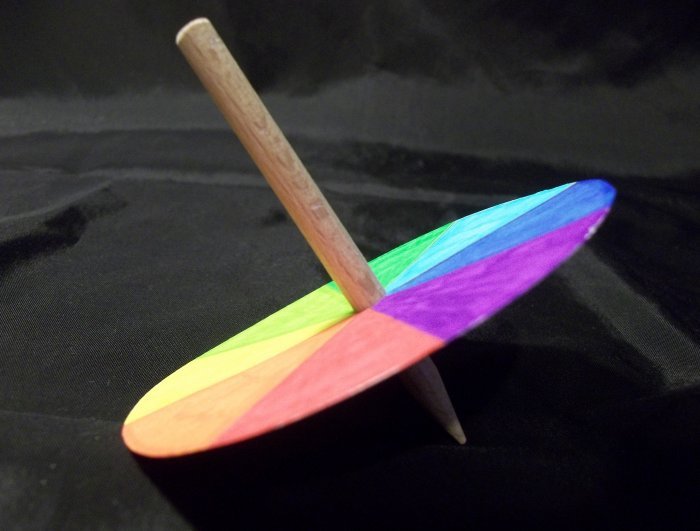
  • Give each child a circular piece of card.Ask them to divide the circle in to six equal segments that match on both sides of the card.
  • Ask them to colour each segment a particular colour and to make it match on the other side of the circle too! 
  • Explain that this is one way to aid memory - to have a visual prompt ....


  • They need to pierce a small hole in the centre of the circle - large enough to push a small pencil through.This will create the spinning mechanism and  action.
  • Now they need to discuss with you the questions and answers you have practised over the year.Ask them to brainstorm with a partner first. 
  • Collate the information they give you on the whiteboard.
Gather our questions and answers


  • Can the children select their six favourite new questions and answers or the ones they think are most useful or the ones they are proud that they can remember and use!
  • They must write the questions on one side of the spinner and the answer to each question on the other side of the spinner of the identical coloured segment. 
  • Now they are ready to try out the game......
Let's spin!


  • Try it out alone! Ask the children to push their pencil through the central hole in the spinner and make sure  that the questions are face up.
  • Each individual child spins their own spinner.
  • Can they say the question the spinner lands on and can they also say the answer they have written? Ask the children to turn over their spinners to check the answer they have just spoken.
  • Thye can play this as an idivudual activity several times.
  • Now give the spinner to a partner - who spins the spinner and must try to read out loud the question the spinner lands on.
  • Can the partner (to whom the spinner belongs) say the answer to the question that is written on the other side of the spinner and matches the question in the correct coloured segment?
  • The two children now work with the other partner's spinner and change their roles in the activity.

Storing memories until next year!


We are getting toward the end of another academic year and its time to ask the children to reflect on their learning this year.
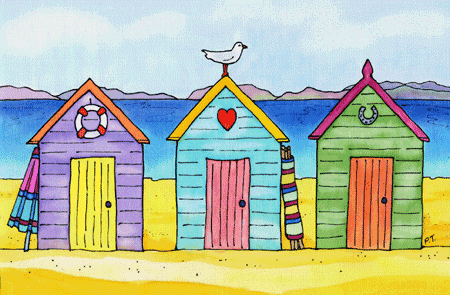
It's almost the Summer holdiays and time to go off perhaps to the beach .Beach huts are places to keep equipment safe until the next time you visit the beach .... and this made me think about asking the children to store language they have enjoyed this year safely ,until we come back off holiday.

I like the idea of beach huts ,because they are bright colourful and can act as "piggy bank visuals" to show how we need to collect,collate,categorise and  store prior learning and our new knowledge this year.Also a great opportunity for AfL for both the child and yourself!  

All you need are boxes with rooves, coloured in bright primary colours.The rooves need to be detachable, so you can lift off the roof of a hut and put written cards inside.Each beach hut needs a sign "nouns" or "adjectives " or "verbs" etc. 

The DFE POS asks us to encourage children to "broaden their vocabulary" and I think it is really important that we help our young learners to understand how you store this vocabulary, ready for use another time.
So here is the idea!


  • Ask each child needs a rectangular piece of card with which to create a postcard.Once finished they will post this card in one of the class beach huts.
  • On one side of the card the children need to write the address. (Does the card need to be sent to the nouns or adjectives or verbs hut etc?).This means that their postcard will be stored in the correct beach hut if you have more than one category of hut.
  • Instead of a stamp the children should draw their own face and add their name (this means you can see who has written the card and also hand back out next year to the correct child)
  • Where you normally write a message on a postcard,the children need to write down key language they have learnt and like the look or sound of this year.They need to make sure that the words are written on the correct postcard- are the words nouns, adjective,verbs etc?
  • Each postcard needs visual symbols on the other side- drawn by the children to represent the words they have selected and want to store and have written down in their message section.


With our Year 3 learners we have been focusing very much on nouns.... so let's have our own "noun beach huts" postcard collection.
With our Year 4 learners we have been focusing on nouns and adjectives - so let's have own beach huts postcard collections - one for nouns and one for adjectives.
With our Year 5 and 6 learners we have focused on nouns, verbs and adjectives plus we may have considered prepositions and conjunctions too. We are going to need several beach hut postcard collections.


  • Now post the cards in the correct beach huts
  • Take time to bring out cards and ask the sender to try to tell the class the words they have put on their postcard and what type of words these are.
  • Take time to look at the pictures too.
  • Finally discuss how we use our memories to store language and challenge the children to try to remember some of their written messages on the postcards right through until the start of school in September!  
  • Maybe you will be able to hand the cards back out at the start of the year and see if the children can still recognise and understand the words on their postcards