Tuesday, 11 March 2014

Shape Sentence Jungles

Shape Sentence Jungles


Creating simple descriptive sentences using a  noun, a verb and an adjective to create a jungle animal.


This evening at JLN training,my colleagues and I were discussing writing simple sentences with Year 4  children  next half term , when we teach the children about jungle animals . It’s one of our favourite units in the JLN  SOW and we are always looking for ways to enhance what we do.

The children have learned about nouns and adjectives as components  of a simple sentence.We have practised colours and sizes but have not as yet practised the position of adjectives and agreement of adjectives in target languages

We want to be creative with the simple sentence structure and language.This year we are going to try writing shape sentences both as physical sentences and also as written descriptions of our jungle animals .

Physical sentences

Hand out to three children in the class, three cards – a noun , a verb and an adjective that describe one of the jungle animals- for example the giraffe 


Stand the three children in a row holding up their cards so that they are visible to the rest of the class. Make sure the children are in a random order – so stand the child with the adjective at the start of the line, the child with the noun in the middle and the child with the verb at the end of the row.


Can a volunteer reorganise the cards into a sentence for you so that it makes sense by moving the children into the correct position? 
Now can a second volunteer create a shape sentence . For example if it’s a giraffe we are describing then can we create a long tall shape with the noun at the top , the verb in the middle and the adjective at the bottom


If it’s a snake  …….


then we need to create a wiggly word sentence like this.....


If it’s an elephant then maybe our word shape will have a noun for the trunk , a verb for the body and an adjective for the tail .


Shape Sentence Jungle.


Can the children put their jungle animals into their jungle setting? This activity leads on well from the above activity . The children need to draw a picture of their jungle backdrop and then write shape sentences for each of the animals in their jungle . They can select four animals. They can use more than one adjective to describe an animal and they need to create their shape sentences so that they flow as a written sentence  , therefore noun , verb and adjective/ adjectives and look like the shape of the animal .
Can other children in the class find and identify the jungle shape sentences. 
Use wonderful art work such as Rousseau's pictures of jungle animals to inspire the children to create shape sentence jungle art and camouflage this in their jungle pictures  !


Monday, 10 March 2014

Mind the gap and get writing

Mind the gap : punctuation prompts

This activity is to encourage the children to write messages that they already know in the target language....
e.g a question , a statement , a command  or a spoken response


Before attempting the task the children need to be secure in their knowledge of spoken phrases.

You could try the activity at first with Y4 toward the end of the year of learning or Y5 and Y6 based on their knowledge of personal information questions and answers .

Children in the activity are being encouraged to show us what they can write rather than penalised for not knowing the correct phrase .
Just what can the children recall and attempt to write in the target language

At the start of the academic year in Y4 give children, working with a partner, strips of paper which just contain target language punctuation and an appropriate  gap for the missing words e.g.
  • target language question marks
  • exclamation marks
  • target language speech marks
  • a full stop
  • a comma and a full stop

Here’s a Spanish example

¿........................................................................?


Increase the challenge 
Expect the children as they progress through Y4 and in to Y5 to work individually on an activity like this .
Give out two mind the gap challenges - so that children need to think of a question and an appropriate response
Increase this to four or five mind the gap strips and encourage the children to create a short written dialogue/ role play or conversation


You can differentiate the task by providing some children with a mind the gap text. 

An AfL Transition Opportunity 
This is an activity which could be used for simple AfL at the start of the Y7 academic year , especially if it's an activity the children have grow used to in UKS2 . Teachers can see what the children can recall , create and write.


Plant pot story actions and song

Plant pot story , actions and song 


Last year as part of a JLN  network project during the Spring term I created a series of simple activities to link to KS1 growing things science focus we developed a these materials and the activities below . 
Thanks to Ana Garcia Lavado who drew the pictures and Emilie Woodruffe @EWoodruffe, Barbara and Flora who  provided the target language phrases and Joanne who created the simplest of plant growing songs based on the familiar refrain of Frère Jacques.

Our Learning Objectives 
To understand how a plant grows and the conditions it requires 
To listen and respond to commands in a target language
To practise performing a simple sequence of actions in the target language
To learn a song in the target language 

(As some of our schools have now developed their own vegetable gardens and plots we found real examples from the target  language countries to share with the children .
Here is a project at a school in Limoges , where you can find a chart explaining what they planted and in which month and pictures of the young gardeners planting their vegetable seeds


The Simple Lesson Activities
The activities below are based on  five simple pictures made in to a story that describes how we grow a plant from seed .Here's a plant pot pictures downloadable zip file 


Here is the   French plant pot story

.......and here are the PDF power point plant pot stories  in the other target languages : 


1. Discuss with the children the conditions required to grow a seed or a plant .
2. Look at crops from the target language country . We selected sunflowers in France, water melons in spain , Kohlrabi in Germany and rice in China. Share with the children pictures of these crops and compare the pictures of real crops with art work linked to the crops :  


And shared with them art work that depicted crops as paintings .Here is a goauche after Rufino Tamayo 


And don't forget the all time favourite Van Gogh's  Sunflowers

3. Read the story power point slides to the children . 
Here is a sound file of the reading of the story in Mandarin Chinese Mandarin plant pot story

Give out the pictures from the plant pot picture zip file to five children and ask the class  to help you to reorganise the pictures into the order that you saw them on the ppt story .Move the children holding the pictures into the correct order and then retell the story a second time . 

4. Order the plant pot pictures on the flip chart in the correct order . Ask the children to help you tell the  story this time .Can they help you to create actions for each story slide .

5 . We then shared with the children the simple song to the refrain of Frère Jacques in the target language .It's made up of the sentences on the power point.  For example in French we sang : 

Plante les graines
Arrose les graine 
Brille soleil brille 
Regarde comme elles poussent 
Voilà vos fleurs 
Voilà vos fleurs 


Here's the sound file of the Mandarin version Mandarin plant pot song

We asked the children to stand up and listen and join in with the correct actions .
Then we encouraged the children to practise the song with us and try to sing along and join in with the actions
Finally the children were able to perform the song on their own!

You could go on to link this work with previous blogposts 


Sunday, 9 March 2014

Springtime story drama and performance

Springtime
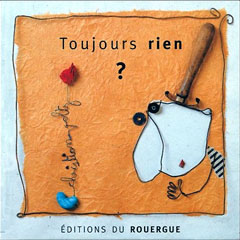
Last year on holiday I bought this wonderful story Toujours rien and decided that it would be the basis of a sequence of lessons on Springtime


The story  is about an impatient gardener and how every day he expects to see shoots above the ground of the seed he has planted . Everyday he finds nothing and everyday a bird flies by too . Until he gives up and doesn't visit and that's the day the bird spots a shoot and picks the shoot and flies off and guess what the gardener comes along the following day ...... There is still nothing to see! 


Today I found this You Tube clip of a retelling of the story with animation and music by a class of French children


Why do I like this clip ? The children are  retelling the story , the story is animated simply and there is music as an accompaniment . Shown to the class , this could be the model from which our classes in UKS2 or Year 7 could create their own performance or their own photo story .
All you need is to read the story to the class, watch the story , cut up the story into sentences and ask the children to reconstruct the story .
Can the children make this into a recount with utterances from the gardener .
Maybe with language learner who are competent they could add asides for the bird. What's the bird thinking ( e.g j'ai faim / miam miam /  la plante pousse )


Combined with this recount of a story you could link the learning to science and use this resource about Le cycle du haricot

Or with younger children you could plant and grow seeds and practise this simple rhyme with actions from this French blog Le petit jardinier

Monday, 3 March 2014

Presents to make and writing to send in the target language for Mothers Day

Presents to make and writing to send in the target language for Mothers Day .........

It's nearly Mothers Day and I decided that the schools we work in should as always celebrate Mother's Day in the target languages .
We create simple cards and gifts for all the children to take home to their favourite carer !

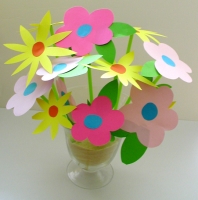
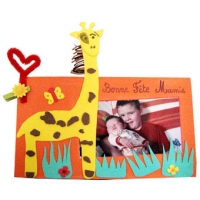
These ideas from teteamodeler can only but inspire everyone  no matter which language you teach . It was the la fête de grand -mère on 2 March 2014 in France but why could we use the ideas below to celebrate our Mother's Day this year?

If you teach French then all the better because you can use the lesson with the older children in KS2 as a reading and following instructions and pictures activity.

Take a look at what you could make and then read my ideas on how you could develop a  target language writing activity linked to the present :


Bouquet of flowers 
On each petal of each flower the children  can write one letter of their message to wish their mum or carer "Happy Mother's Day " in the target language and say that they love them!


Photo Frame 
A picture in the frame is pretty obvious but what about the children thinking of all the adjectives that describe their mum/ carer the best and looking these up in a bi-lingual dictionary or using a word frame .The children can  fill the frame with all the kind and caring adjectives and phrases they can find and think of for their mum/ carer . With UKS2 children encourage them to use adjectival agreement carefully for their female carer  . 


Boite d'amour 

Ask the children to trace around their boite d'amour template and then make a card template which they should cut out and  draw around  on paper three times so that have  three paper  heart shapes that will fit in the boite d'amour

On each heart shape they should on one side write a simple "I like" sentence about something the child likes to do with their mum or favourite carer e.g. "I like to go for a walk with you  " " I like to listen to music with you"   "I like to cook with you " , "I like to play football with you " 
You should brainstorm these phrases first and make a collection on the flip chart or whiteboard .

On the other side of the heart they should draw a picture to represent what they have attempted to say in the target language on the heart .

Put all the hearts picture side up in the box and give as  a present on Mother's Day . 

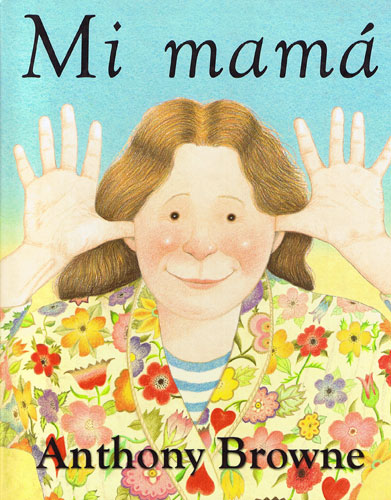
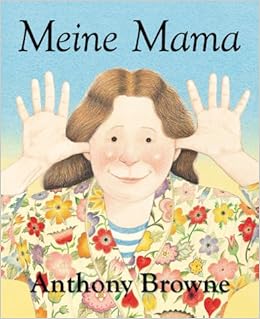
And then don't forget to read for the children the most marvellous story in the third person singular about why "Mum " is a super hero according to the story by the wonderful Anthony Browne  

In French..................


In Spanish.................


In German .................


Creating magic with personalities and adjectival agreement

Creating magic with personalities and adjectival agreement !


We want to help all our young learners in UKS2 understand the use of Grammar to speak and write correctly . We are taking a "magical " approach with adjectival agreement and describing ourselves in  our Year 6 focus on presentations about ourselves .


We are about to look at adjectival agreement with adjectives to describe our personal qualities . We have looked at adjectival agreement before with clothes and animals but somehow this is different and more personal!
So I have been trying to think of ways to make this a physical learning activity and this is what I have created .


You will need:
2 A4 cards ,six small word cards , a large envelope and some blu-tac
The children will need whiteboards and a piece of paper for their draft tweets

One A4 card has a picture of a boy on it and you are going to add the phrase in the target language "I am ....." 


The second A4 has a picture of a girl on it and again you will add the phrase in the target language "I am 

You just need to add some target language. Here's on of the cards I use 


  You then have two sets of adjectives that can describe someone - pick regular adjectives where the ending will change letter when used with the girl for example ……………..

 Put the feminine agreement adjectives in the envelope and on the front of the envelope draw a large magic wand. 


 At the start of the lesson , explain that the class are going to try describing themselves. Can the class be your language detectives?
Show the class the magic envelope , blu-tac this to the wall and say that the class are going to help you to do  some "language magic"


First 
Show the children the key adjectives with no agreement and practise the pronunciation of the key adjectives.
Discuss the meaning and add actions  .
Create with the class the facial expressions for each quality – what might a “strongman” look like facially? How do you look when you are shy etc?
With the class perform an  adjectival expressions face warm up . This involves the children moving their face to express the emotion or quality e.g. clever/ shy/ strong etc as you call them out. Make the activity quicker and quicker by saying the adjectives faster and faster


Second :
Give out a picture card of a girl to a girl and a picture card of a boy to a boy and ask them to stand at the front .
At the bottom of each card is written "I am  ...."  in the target language . Explain that this means "I am ...." . Can the class practise this with you.
It's two sounds-  so ask the children to practise the sounds with you and add two points of a finger at themselves - one for each sound .
Can they sound proud … they are making   announcement   about themselves. Ask them to say it at least 5 times each time more confidently  !

Now add an adjective   e.g. "I am strong"  . (Children should also do the actions - two points of finger for "I am "  and facial expression for adjective). Can they sound like the “strong man”, the shy person , the intelligent person etc .

Ask them to share the way they say the statements with a partner.
Practise asking the question “What are you like?”
Can the children ask and answer the question around their  tables- just using the phrases you have practised as a class?

Play Physical Quiz Quiz Swap .
Each person says and performs as above one of the three phrases – all masculine adjectival agreement for now.
They walk round the room , shake hands with another child- say and act out their statement and they  must  take on the statement and the actions of the other child and move on to a new partner saying this new statement and with these new actions . The Quiz Quiz Swap starts again!

Third
Show the children a  masculine agreement adjective  word card - so  one  of the words you have already practised and shown them . Introduce all three words and ask for three volunteers to stand to the left of the child holding the picture of the boy 


 Can the class help you say and then write three sentences about the boy in first person singular e.g. “ je suis  fort “ ?  You are all going to write these sentences   in the air with imaginary magic wands . All the words they need are on the cards that they can see at the front of the classroom   ? 
Now can the children tell a partner what they wrote in the air.
Take feedback and listen to sentences from volunteers

Fourth  
Now ask them why you have a picture of a girl with the same phrase?


Give them a clue and say it's all to do with the magic in the envelope and point to the envelope you blu-tacked to the wall


Ask them to discuss possibilities with a partner.
Take feedback - don't give any answers away yet though!
Ask them to discuss with a partner  which  words they could they use from the boys sentences about the girl ? 
Do they think they can say a sentence using the girl not the boy . They will say sentences that they wrote in the masculine etc . Agree with them but show them the  envelope with the magic wand on it the correct spelling of the adjective - so from the envelope you will produce the card with the feminine agreement spelling of each of the three adjectives . Ask three volunteers to stand to left of girl . Can the class spot spelling changes i.e. the extra letter? 
Can the class help you make a simple  rule  to help the class ? Ask them to discuss this first  with a partner .

Fifth
Blu-tac the two pictures to flip chart with the three correctly agreed adjectives (masculine or feminine) to the left of the correct picture

 Make it a class challenge. Ask the children to write a statement as if they were the boy on their whiteboards - I might start with air writing again as this is non-threatening and inclusive.
Repeat the activity with the girl 
Ask the children to share with the class what they have written . write two correct examples on the whiteboard .
Look at the rule and highlight the added letter.
Ask the class if they had to write the spell on the magic wand what would it be - effectively you want the class to help you to write the rule they have been practising. I would write this up on a magic wand template and place this on our languages working wall - to remind them.

To you class Magic wand add a  tag that says "Our class magic rule for the spelling of adjectives when describing a person is ……………………”


Sixth 
Can they write one sentence about themselves?
Firstly let them write sentences with the words on the board .
Secondly remove the words as they become more competent and encourage independence .
Thirdly  introduce two new regular agreement adjectives and let  them practise using these  adjectives and direct the class as to whether they are describing a male or a female by placing the adjective next to either A4 boy or girl picture card 
Fourthly can they write two more sentences about themselves? .
Extend the activity….., can they write a truthful sentence about themselves and use a bi-lingual dictionary to find the word to describe themselves  and add an adjectival ending if  necessary.

And finally….
Set up a draft tweet activity ...our children love the draft tweets .
Can they write a draft tweet dialogue between two characters- one tweet per person in the dialogue . Ask the children to select a favourite character from a book -one male character and one female character or a famous character from a history project  or two imaginary characters from an Art  project . Can they think of a personality trait . Can they remember how to ask the question “What are you like? Can they write the name phrase to introduce the character “I am called ……”. 
Each child should attempt to write one tweet from the boy and one tweet from the girl in first person singular . Keep to regular agreement adjectives . Give the children a list to select from Remind them they only have 140 characters!

And as a follow up ...
Why not create a two sided concertina character .I was inspired by this cartoon on this site educationcenter. com 


I would put a male and female head on this character . One side would be male and one side would be female . I would ask the children using the same set of regular ending adjectives to complete the concertina character as above but in the target language for the female concertina character on one side and on the other side for the male concertina character


Thursday, 27 February 2014

Spanish KS1 ,Going Bear Hunting Rhyme and Game

Spanish KS1  ,Going Bear Hunting Rhyme and Game

1,2,3
Suish suash, glo glo glorogló
4,5,6
Plochi plochi plop
7,8
Túpiti túpiti tap , suu, uuuu
9,10
Tipi tip tipi tip
İAhhhhhhhh!  İEs un oso!
10,9,8,7,6,5,4,3,2,1

        The children are going normally going to listen to the story vamos a cazar un oso when we play this Going on a bear hunt rhyme and game .
But they love it so much that we often play it just for fun!


2.    


      Our children practise their numbers first .
3.       We set up a path of numbers across the classroom and the children step carefully across the path of numbers in a line. The numbers are repeated so we have three paths of numbers of  1-10 .the children sing / chant the numbers as they walk until the teacher calls stop!  The teacher calls out a number and if a child is stood on that number then they are out of the game and caught by the imaginary bear ! The teacher can call put more than one number.
4.       How many bear hunters will we have left after we have played the game three times
5.       Once we feel the children know their numbers well enough, we ask them to put on their bear hunter kit ( imaginary hat , binoculars , wellington boots) and we pretend to go out to see what the terrain is like .
6.        For each of the terrains – as in the book – we have a sound to represent  the terrain

Suish suash glo glo glorogló = river
Plochi plochi plop= mud
Túpiti túpiti tap= forest and owls
Suu, uuuu= snow storm
Tipi tip tipi tip = inside a cave

7.       We need to become good explorers , so we practise the sounds and add actions
8.       We ask the children to close their eyes and come with us on an imaginary journey through the different terrains .The teacher  tells the  story in English of their journey and the children join in  with sounds that “colour” in the terrain that is described . they are the sound effects.
9.       Now they are finally ready to become” Bear explorers “! They need to practise the rhyme , remember their actions and their numbers  too …..but when they get to the end of the rhyme they need to listen out for you to shout out / whisper / say very quickly etc the final line İAhhhhhhhh!  İEs un oso!

10.   When they hear you say the final line, they must freeze frame and stay very still until you have counted backwards very slowly from 10-1. If they move then the bear will catch them!