Showing posts with label communication. Show all posts

Tuesday, 29 September 2015

Superhero language skills,messages and an AfL postbox

With Year 3,some of our network using our SOW will be looking at "superheroes" and how to introduce ourselves as "superheroes".
Joanne Hornby did some fabulous work on this last year in Spanish with her beginner language leaners. 
Not long ago I put together People Pillar Portrait Poems as an opportunity to describe superheores etc
Look what I found yesterday in Dunelm Mill- whilst actually looking for new pillows!
 It gave me an idea! Why not create Superhero AfL boxes! A really simple idea but could be very effective and an idea that could run through the year. 


Superhero communication powers
  • Discuss superhero "powers " with the class
  • Talk about how some superheroes can have super powers of communication 
  • Suggest that the language learning taking place in your class is allowing your young learners to develop the superhero power of communication.Some of your class may already have these super powers! (Think about your learners working with EAL)
  • Talk about the powers of memory , recognition , listening and reading comprehension, pronunciation, writing in a target language.


  • Share with the class your super hero powers' box.This is a blank box and it needs decorating.It needs a postbox opening on it and a lid that can lift off - or you can use one like the box I found in Dunelm Mill!  The children are going to help you decorate the box.They need to take one of the superhero communication powers and make a symbol for this super power.All they need to do is to glue their symbol to the box!
Creating the AfL superhero ,message strips 
  • Create with the class superhero pictures - small drawn pictures of the face or figure of their favourite superheroes -one per child with their favourite superhero on the photo and a target language greeting written in a speech bubble next to the character.
  • They need to add the target language name phrase for themselves under the picture.You could let the  children to add a superhero surname too e.g je m'appelle Madie Smith Catwoman"

  • Collect in  the drawings. Glue each drawing to the left hand side of A4 paper.One picture below another. You will now have a left hand side list of pictures.
  • Now you can now keep these sheets to  create superhero message strips when needed.One per child when you want the children to think about which "super powers of communication that they are getting better at and which super power they feel they still need to improve.
  • Each child is given a strip of paper with their own picture and phrase on it.They are going bto write their message back to you on this strip of paper and post it in the super power box.
  • Discuss with the children what types of language super powers you are developing with the class at the moment - remembering(memory), saying  accurately (pronunciation),reading carefully (recognising),etc
  • Can the children on their individual strips of paper write a super power message to you about what a language learning skill(super power) they think they are developing well and a language learning skill (super power) from your list that they want to get better at.
  • All they have to do is date the strip of paper and post it in your super hero box when they have finished.
  • You can look at the strips of paper as a class and ask a child to share what helps them have a  "good" super power in a skill or you can look at the strips away from the class and see what your next steps as the teacher should be.
  • The super power message strips can be glued in individual record books at a later date too as an informal skills progress record  

Wednesday, 21 January 2015

Exploring role play

This blog post is to support those looking for ways to work with role play that encourage teacher and children to practise:

asking and answering questions
speaking in sentences
engaging in conversation 
and
describing people,places and things orally (and in writing)


It is really important that you plan for the stages of developing this skill:
  • From simple responding to a simple question (maybe in a game where the teacher sits children in a circle and the class practise in song or rhythm a question until the teacher stops and selects a children to respond- perhaps by rolling a ball to the specifc child or picking a name tag lolly stick randomly from a tub etc
  • Through to matching appropriate questions and answers that are written on randomly ordered cards and reading them in a correct order with a partner
  • To developing conversations independently using asides and  additional language.
Take a look at this report for some very real reasons why it is so important to support children to build the ability to engage in conversation with target language speakers.


Here are some creative ways to develop your role play beyond simple personal information questions and answers, shopping dialogues etc 


Friday, 5 September 2014

Celebrating international literacy day


It’s “International Literacy Day” on Monday 8 September- so what better way to put a marker in the sand and make those cross curricular first steps between target language learning and literacy."Literacy and sustainable development" is the strap line and when you reflect on what we hope to achieve for our young learners it's that they will become competent young linguists who can communicate for work and business in another language sometime in their futures. who knows what communication and language challenges in their work and personal lives they may have to face.

Languages and Literacy belong together so this is an ideal opportunity to investigate and celebrate links between languages  and the structure of languages. Here are a few ideas we can easily incorporate in to our language teaching and learning next week – even if it’s a day or two after the official international literacy day!!

Possibility One :Exploring the World family of languages 


Who has the book below on their shelves.....somewhere?
Take the children on an exploration of another language  - maybe one that is spoken by children in school or maybe one that is unfamiliar to all your learners.
I love the fact that the subtitle says "talk your way around the world"!
The  book has short histories of each language , simple and useful phrases, pronunciation guides and a structure focus e.g in Turkish it’s explained that there are two words for “you” …..now how easy is that to link to French , German…..??


Possibility Two: a international story read by the author is his/her original language


Does it matter is the children don’t understand each word? In this instance it’s about the children seeing that stories exist in other languages. We love using this Eric Carle clip of the Hungry Caterpillar read in German by the author himself.


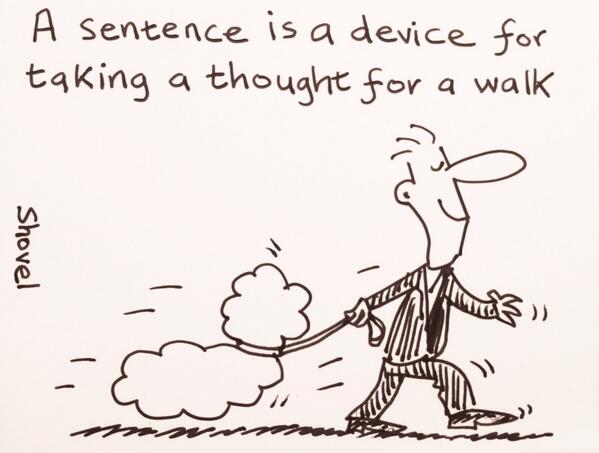
 Possibility Three: Taking a thought for a walk in two languages!


Why not explore some simple writing in the target language you teach in school. I love this cartoon and the blog I wrote last academic year is all about how we can encourage young language learners to take a thought for a walk in any language!

Possibility four  :Links between Literacy,target language grammar and drama